The Philippines hosted a regional effort to connect higher education, workforce skills, and industry innovation with the development of a sustainable blue economy, bringing together the Association of Southeast Asian Nations (ASEAN) and the European Union (EU).
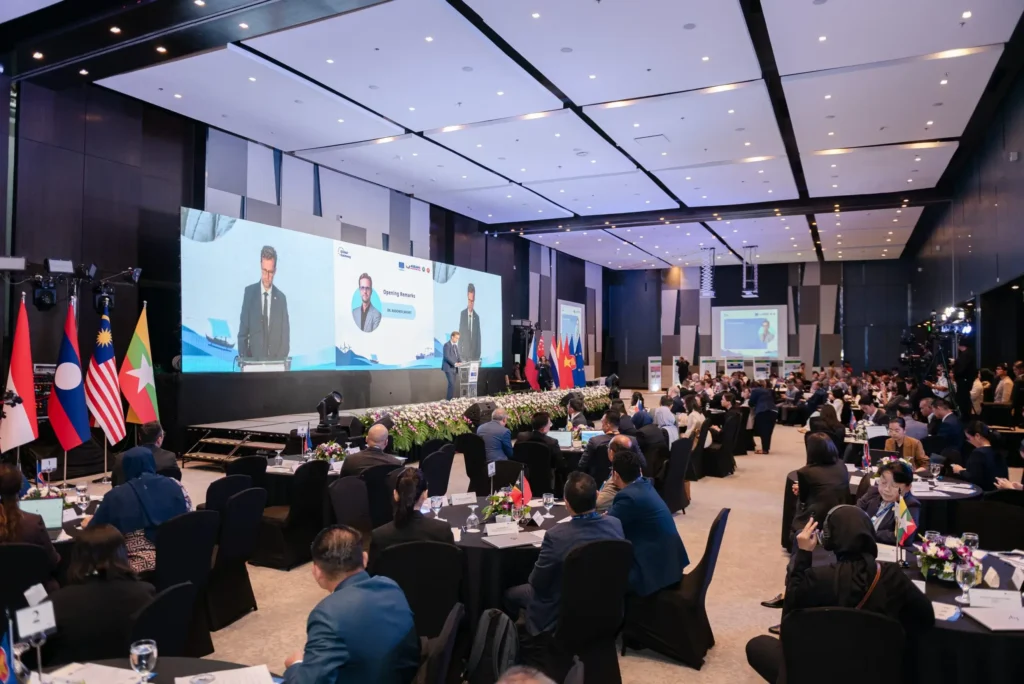
The 4th ASEAN-EU Policy Dialogue on Higher Education was held in Manila on October 27–28, 2026. The meeting reaffirmed the two regions’ commitment to cooperation in education, skills, and innovation as part of their strategic partnership.
Organized under the EU-funded Sustainable Connectivity Package–Higher Education (SCOPE-HE), in collaboration with the Commission on Higher Education (CHED) of the Philippines, the dialogue brought together policymakers, higher education institutions, technical and vocational education and training (TVET) institutions, and industry representatives.
Their discussions focused on how education systems can respond to changing skills demands while supporting sustainable economic activities connected to oceans and coastal resources.
Education links skills development with sustainable industries
The blue economy includes economic activities connected to marine and coastal resources. These can support livelihoods and economic growth while protecting the health of oceans and coastal ecosystems.
During the Manila dialogue, participants examined how higher education and TVET systems can better support four priority sectors: fisheries, maritime transport, coastal tourism, and offshore renewable energy.
These industries require people with relevant technical knowledge, practical skills, and the ability to adapt to changing technologies and sustainability requirements.
For Philippine educational institutions, the discussion highlights the importance of connecting learning and training with the needs of industries that depend on marine resources and coastal communities.
Stronger cooperation between schools and industry can help identify emerging skills requirements, inform education and training programs, and create opportunities for research to address real-world challenges.
The dialogue also places education within a wider regional effort to promote sustainable growth and more resilient coastal and ocean-based livelihoods.
ASEAN and EU strengthen their strategic partnership
ASEAN Secretary-General Dr. Kao Kim Hourn emphasized that the success of the blue economy should be measured not only through economic growth but also through the condition of oceans, the strength of communities and the opportunities available to young people.
He highlighted the role of education in connecting policy with practice, research with industry, and talent with opportunity.
The European Union also underscored the importance of education and skills development within its Global Gateway strategy.
Dr. Radomir Jansky, Deputy Head of the European Union Mission to ASEAN, explained that the EU works with partners to build reliable, sustainable and inclusive connections that bring practical benefits to people.
According to Jansky, support for the blue economy includes investment in maritime sectors, skills, research, innovation, and resilient coastal and ocean-based livelihoods.
The cooperation brings together education and workforce development with broader efforts to strengthen sustainable industries across the two regions.
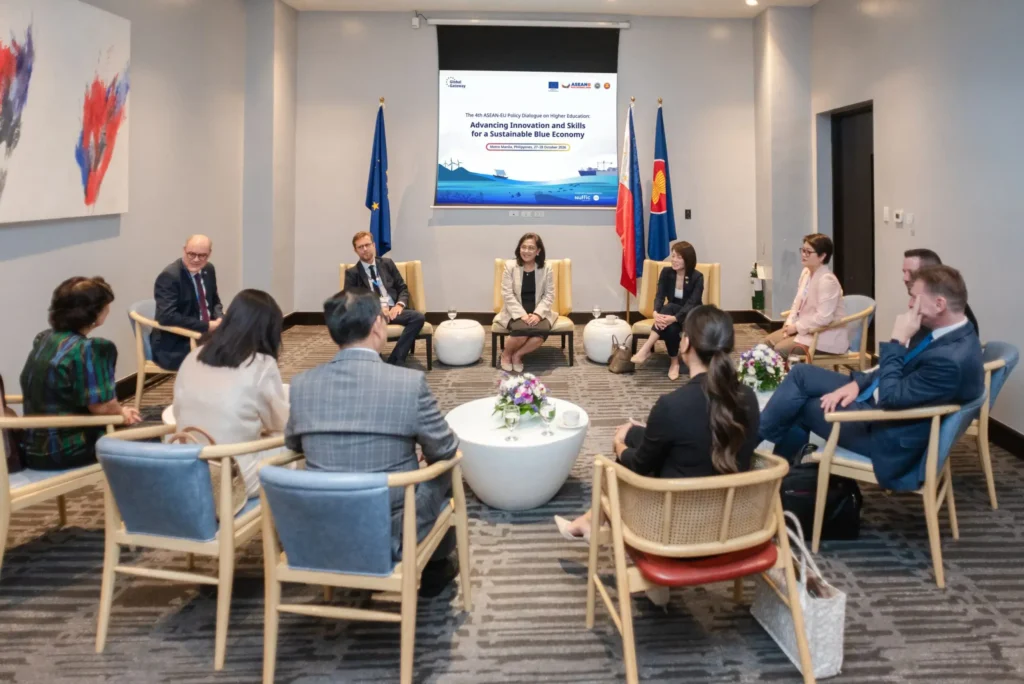
Photo credit: SCOPE-HE
Philippine education leaders call for practical action
CHED Chairperson Dr. Shirley C. Agrupis highlighted the importance of turning regional cooperation into concrete outcomes.
“Higher education and TVET systems play a central role in equipping learners with the skills needed for sustainable development,” Agrupis said.
The dialogue provides a platform for education officials, academic institutions and industry representatives to identify ways to strengthen that connection.
For students and educators, closer collaboration can help make education more responsive to the skills needed in emerging and evolving industries. For employers, stronger links with educational institutions can help identify workforce needs and explore research partnerships.
The dialogue’s focus on education-industry linkages also recognizes that preparing people for sustainable development requires cooperation across sectors, not action by educational institutions alone.
Manila Policy Brief to guide next steps
The meeting is expected to contribute to a Manila Policy Brief containing actionable recommendations for policymakers and other stakeholders.
Building on previous ASEAN-EU policy dialogues, participants will work toward practical solutions to strengthen education-industry connections, promote inclusive mobility and enhance cooperation across regions.
These recommendations are intended to help advance cooperation and support sustainable and inclusive growth.
The next step is to translate the dialogue’s shared priorities into practical measures that educational institutions, industry stakeholders, and governments can pursue.
For the Philippines, the discussions offer an opportunity to strengthen the role of education in preparing learners for changing workforce needs while supporting industries that rely on healthy oceans and coastal resources.
By connecting skills development, research, and industry needs, regional education cooperation can help create pathways toward a blue economy that supports both livelihoods and environmental sustainability.
For more stories on Philippine education, innovation, and initiatives creating opportunities for Filipinos, read more uplifting stories on GoodNewsPilipinas.com — Making Every Filipino Proud.